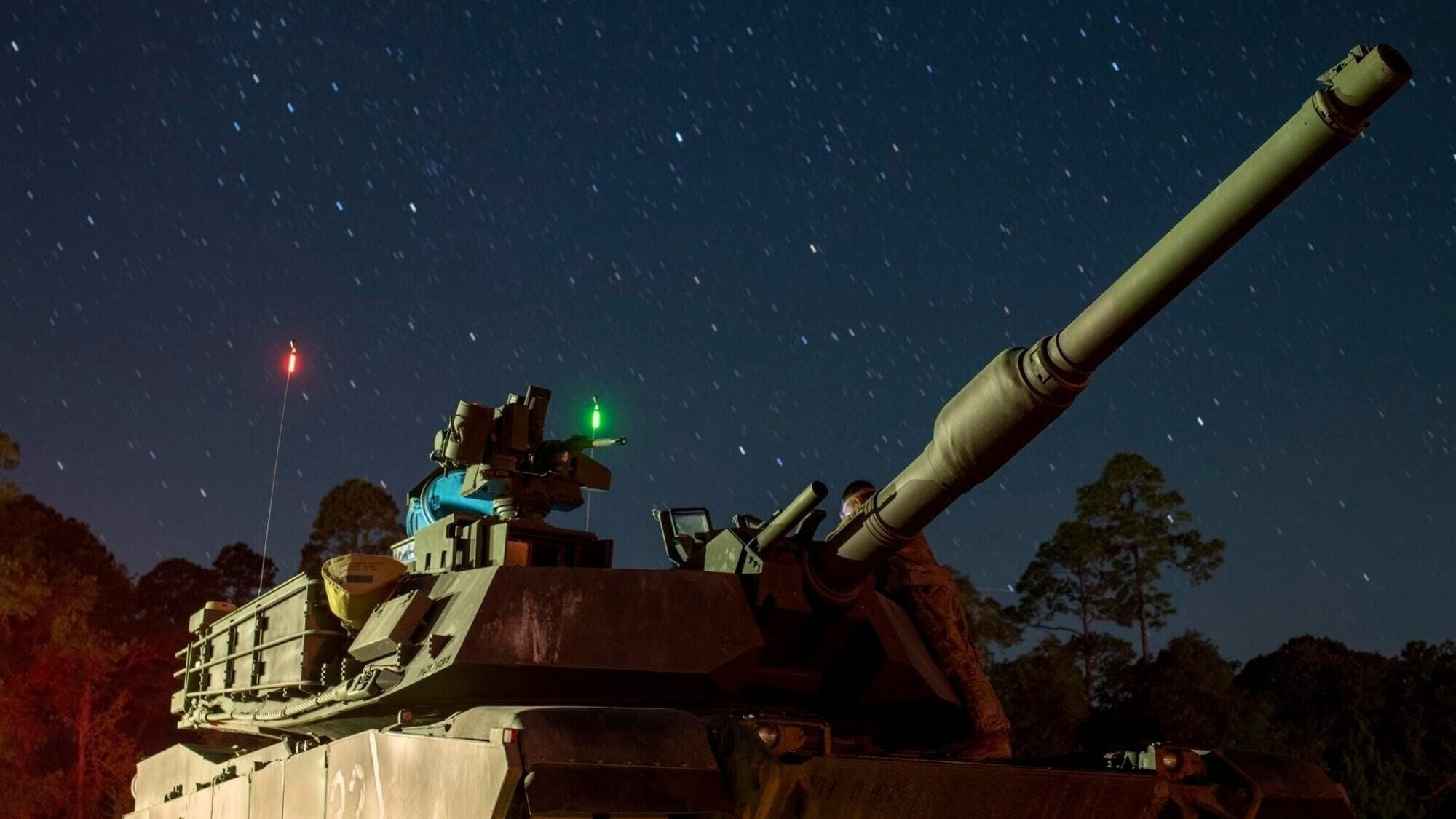
Army Spartan Brigade preparing to put newest combat vehicles through their paces
“[We’re] trying to to mirror what it would be like to deploy into an austere environment, from fort-to-port, and then generate combat power on a foreign soil.”
“[We’re] trying to to mirror what it would be like to deploy into an austere environment, from fort-to-port, and then generate combat power on a foreign soil.”

The award comes ahead of the Army's $6.5 billion recompete of the contract next year.
Michigan’s defense ecosystem and expertise makes it a special asset for production.

General Dynamics is offering the Army a design approach -- not a specific vehicle -- that rigorously examines a wide array of options. The common factors: advanced electronics, open architecture and artificial intelligence.

Manned armored vehicles will have a place even in a world of killer drones, experts agreed. But will they engage the enemy directly with big guns, or stay hidden and send out armed robots instead?

Adding robot scouts and replacing vintage vehicles – the M113, the M2 Bradley, and potentially even the M1 Abrams – will make heavy brigades much more mobile, lethal, and aware of threats, Maj. Gen. Richard Ross Coffman says.

Instead of a single centralized Skynet trying to mastermind (or micromanage) operations, the Army is looking at a federation of more specialized, less ambitious AIs, each assisting humans in different ways.


Blending superior optics, advanced stabilization and AI-powered autonomy in a compact and rugged system, ASELFLIR 600 delivers unmatched intelligence, surveillance and reconnaissance (ISR) capabilities.

The Army estimated the OMFV troop carrier would cost $46 billion and the MPF light tank would cost $16 billion. The GAO has doubts.

After weeks of COVID delays, combat soldiers are now testing both the IBCS network and the IM-SHORAD vehicle at White Sands. The first live shots against flying targets are just weeks away.

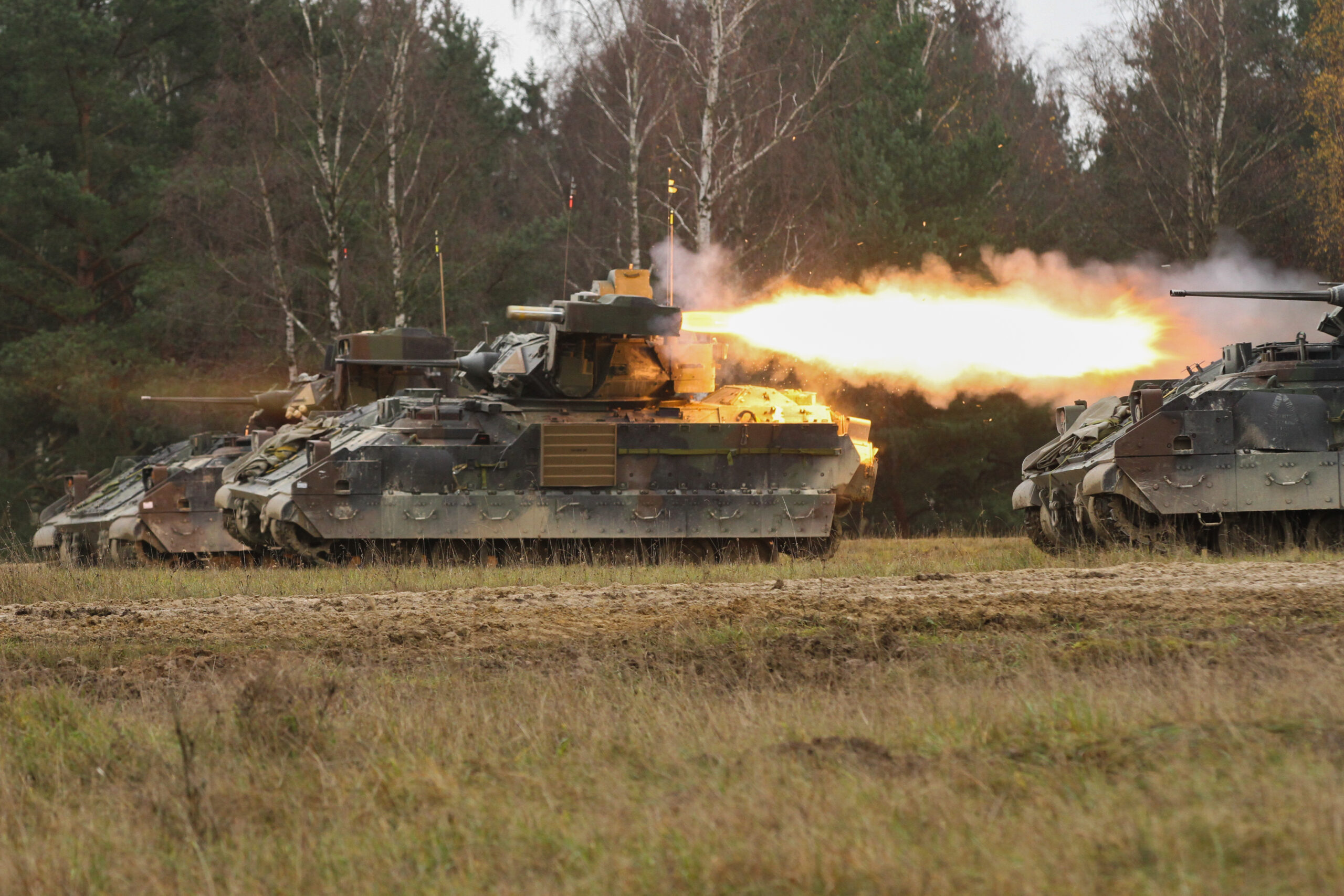
The original TOW was a revolutionary tank-killer when it entered service in 1970. With a new warhead, improved guidance, and greater range, the newest model is not your grandfather’s guided missile.
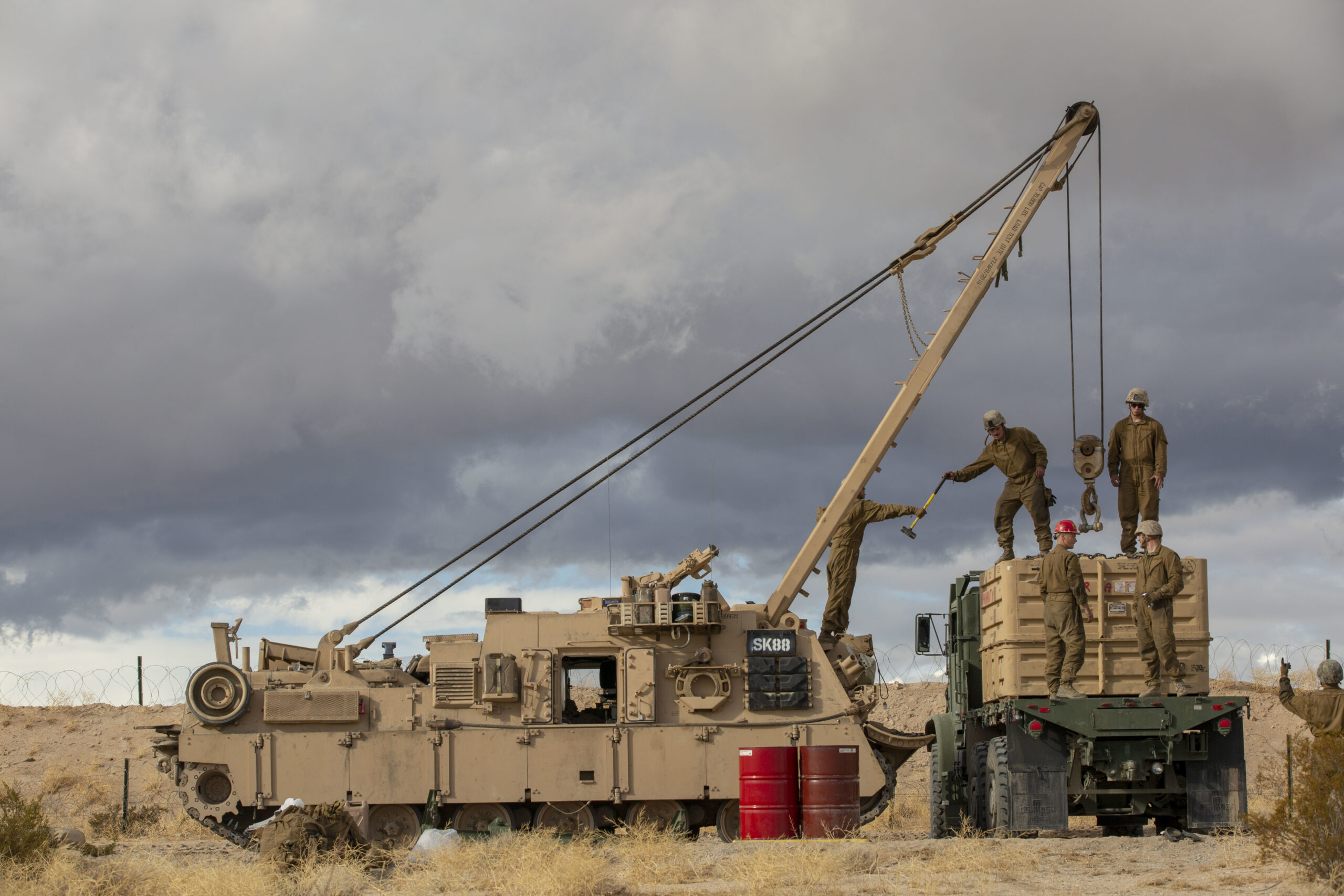
A modern mechanized military lives or dies by maintenance. But what if a computer could warn you when your weapons and vehicles were about to break, so you could fix them before they ever let you down?


Cybersecurity skills must evolve in near-real time as Zero Day threats continue and AI provides new challenges.

The Army’s slashed its 2021 buys of the Armored Multi-Purpose Vehicle (AMPV) and upgraded Paladin PIM howitzer to give the factory time to make fixes, particularly to quality control.
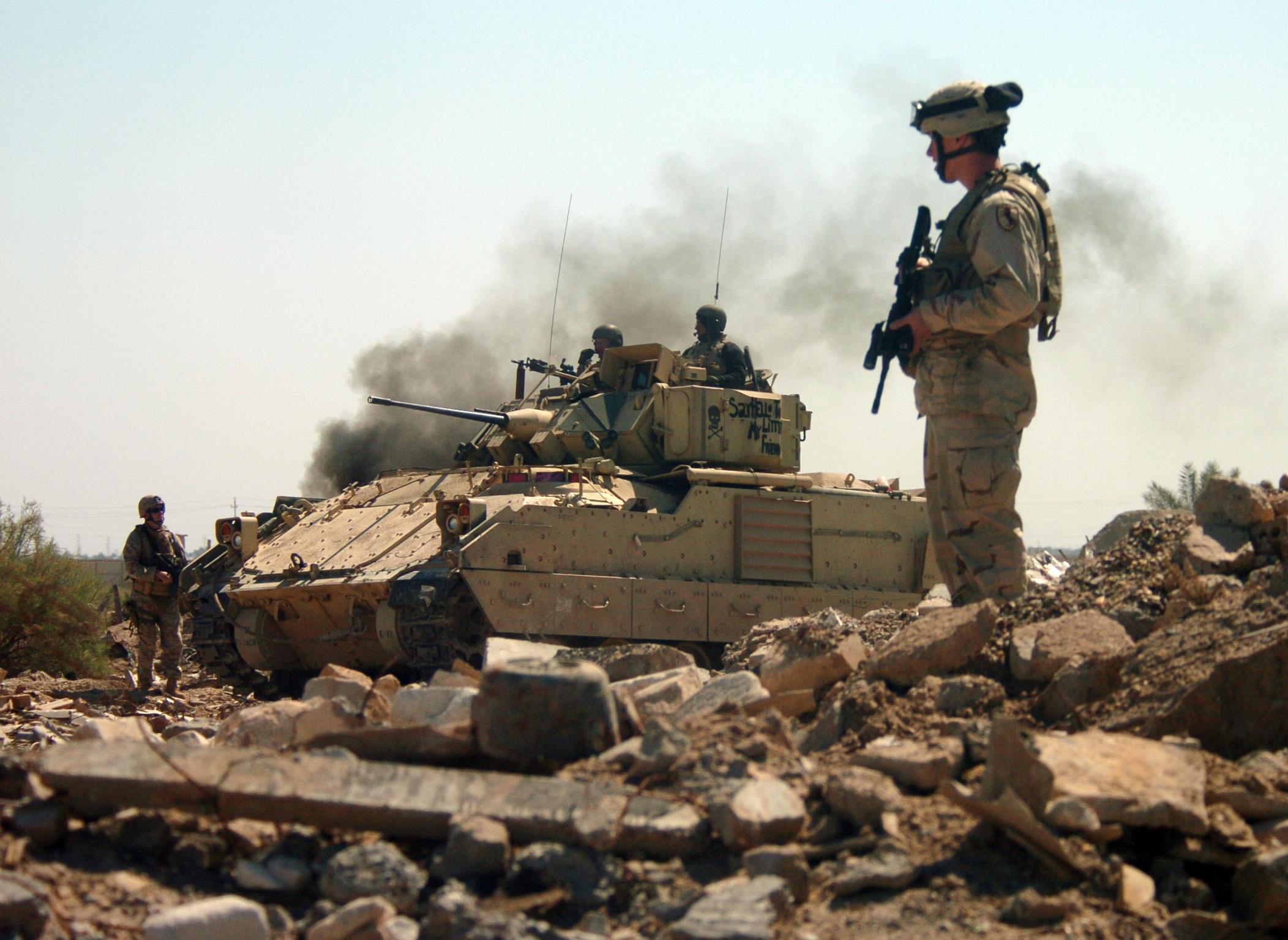
After rejecting prototype vehicles built at industry’s expense, the Army is starting over with a competition for low-cost ‘digital prototypes.’ When will they physically build something? TBD.

The Army has struggled for decades to fit armored vehicles on airplanes. The real challenge is getting them across rickety Soviet-era bridges in Eastern Europe.

Six companies got $150,000 Field Artillery Autonomous Resupply contracts to study everything from exoskeletons that strengthen human ammo handlers to robots that might replace them.